
World News in Brief: South Sudan aid plan, rising cost of healthy eating, Europe’s diabetes burden
Humanitarian Aid
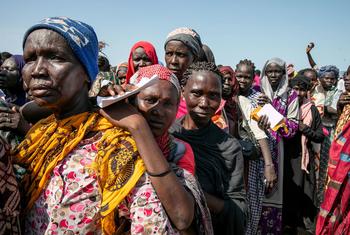
Humanitarians have launched a $1.8 billion plan to support six million people in South Sudan next year, the United Nations has reported.
The conflict in neighbouring Sudan has had an impact on the country’s economy, increasing the prices of food and the number of vulnerable people who need assistance.
It is estimated that 7.1 million people in South Sudan will continue to be food insecure during the lean season, which runs from April to July, while roughly 1.6 million children will remain at risk of malnutrition.
‘Multiple shocks’ loom
Humanitarians will continue to work to ensure that people no longer have to depend on aid, said Marie-Helene Verney, UN acting Humanitarian Coordinator for South Sudan, speaking at the plan’s launch in the capital, Juba, on Tuesday.
“Sadly, for most people, we expect multiple shocks, including the negative impact of climate change, which will continue to drive acute needs next year,” she added.
Last year’s humanitarian plan called for $1.7 billion and is only 54 per cent funded.
Eating healthily costs 4.3 per cent more today than in 2020: FAO
Eating healthily costs well over four per cent more than in 2020, the UN Food and Agriculture Organization (FAO) warned on Wednesday in its annual Statistical Yearbook, which also highlights the impact of natural and man-made disasters on agriculture.
FAO said disasters correspond to average losses in farming of $123 billion per year, which is five per cent of annual global agricultural output.
Although more than 870 million people worked in agriculture in 2021, representing 27 per cent of the global workforce, this is well below the number at the turn of the century, when one billion people worked in farming – the equivalent of 40 per cent of all those working.
The FAO Statistical Yearbook also revealed that nearly 20 per cent of food is lost in sub-Saharan Africa after harvesting, representing the highest tally globally.
Europe leads the world in children with type 1 diabetes: WHO
Countries must do more to detect and prevent diabetes - particularly in Europe, which has the highest burden globally of type 1 diabetes among adults and children.
That’s according to the World Health Organization (WHO), which said Europe has nearly 300,000 children with type 1 diabetes.
The region also sees the highest number diagnosed with the illness every year, placing a huge burden on individuals, societies and healthcare systems, including reduced quality of life, productivity losses and high treatment costs.
WHO noted that vision impairment linked to diabetes is the most preventable cause of blindness among Europe’s working-age population.